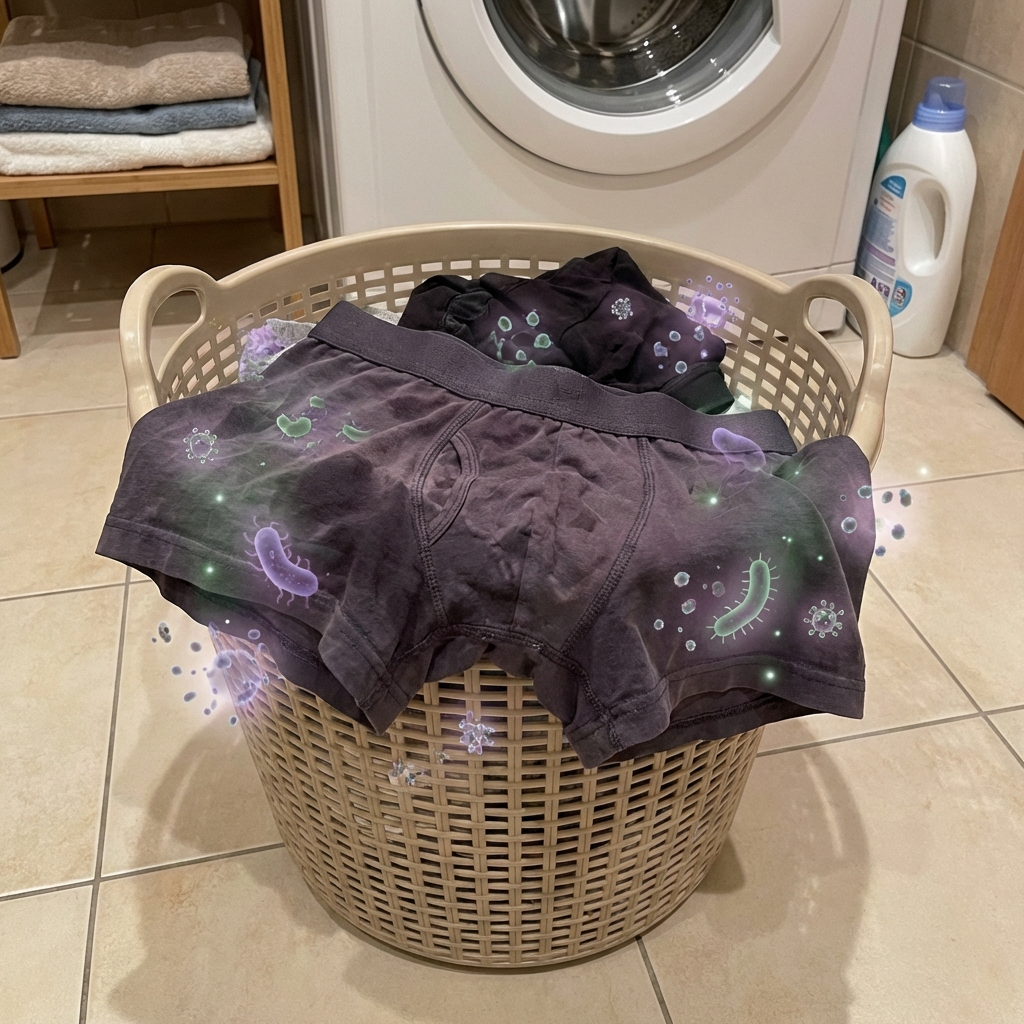
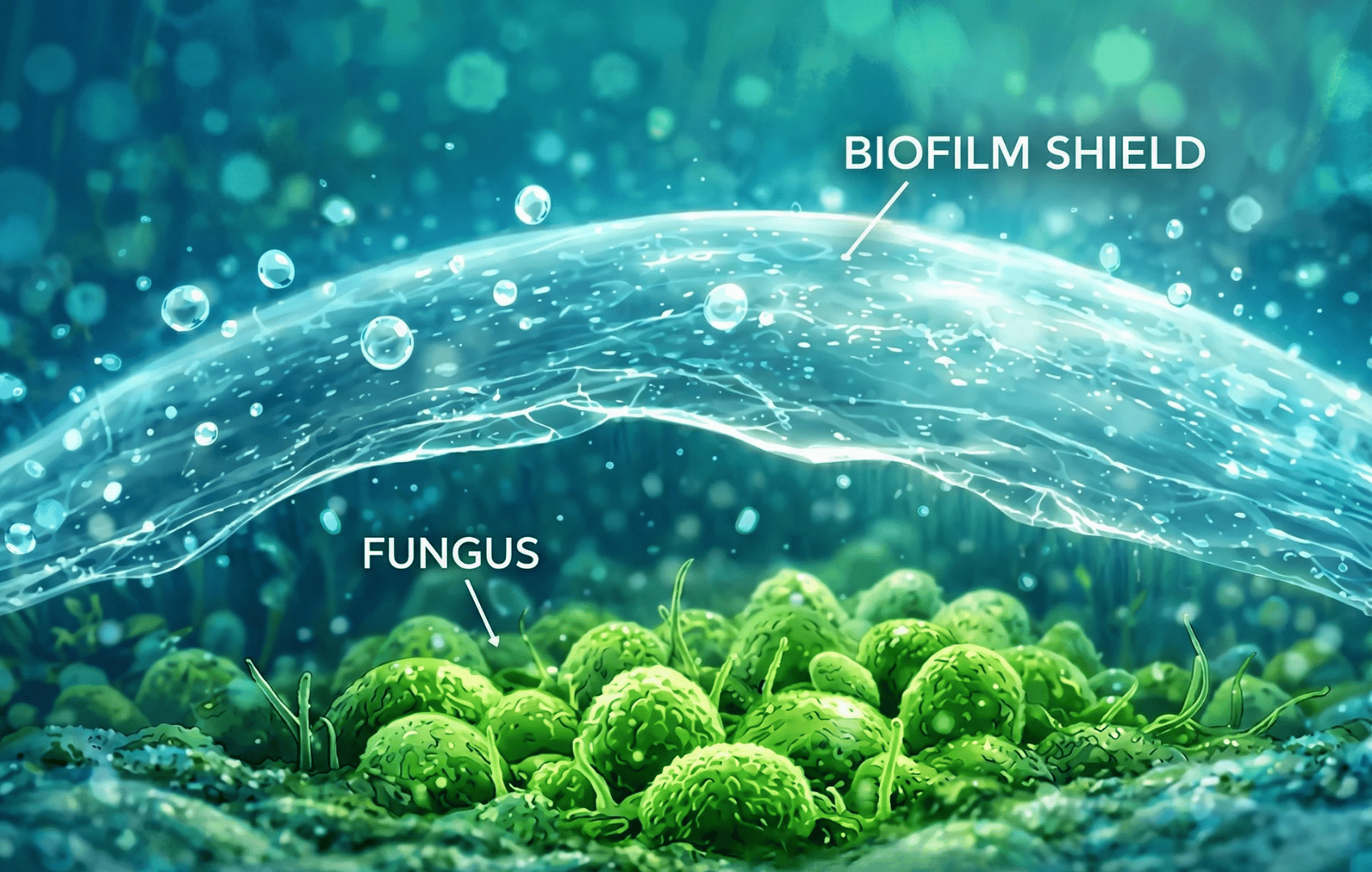
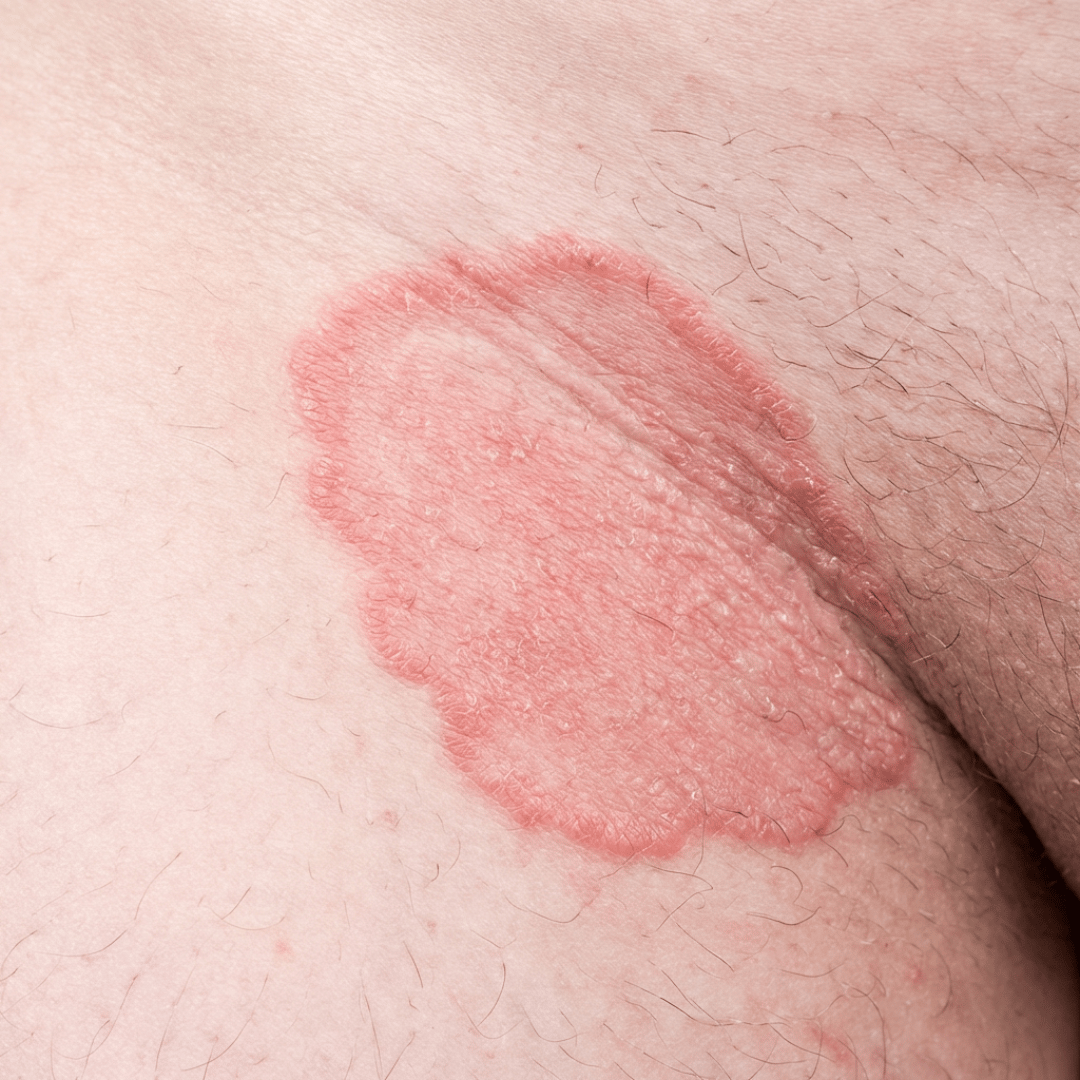
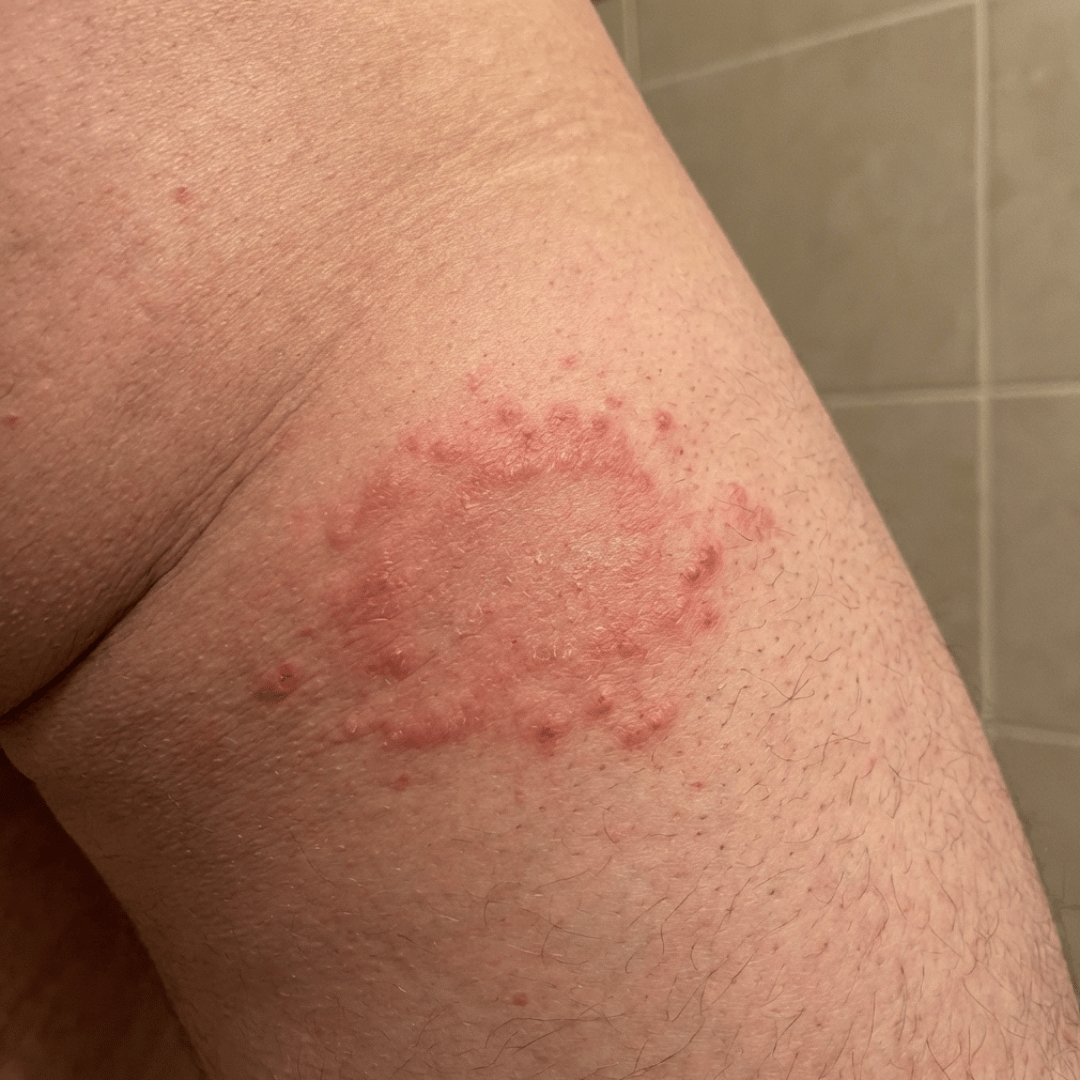
When groin fungus takes hold, it does something most men have never heard of. It starts building a biofilm, a microscopic protective shield around itself. Think of it like invisible armor. This biofilm makes the fungus up to 1,000x more resistant to standard antifungal treatments.
So when you apply cream and it seems to work for a week... the fungus isn't gone. It's hiding behind the biofilm, waiting. The moment you stop applying, it comes roaring back. And each time it does, the biofilm gets stronger.
That's why men who've had jock itch for months or years feel like they're in a "losing battle." It's not that they're doing something wrong. It's that the products they're using literally can't reach the fungus.
And it gets worse.
Some products actively make the environment more fungus-friendly:
Regular body wash — most contain petroleum-based moisturizers and synthetic oils that trap moisture against the skin. You think you're getting clean but you're actually feeding the fungus.
Cocoa butter and shea butter — the go-to moisturizers. But if that "dry patch" is actually fungal, you're literally feeding the colony every time you apply it. This is the #1 mistake Black men make with jock itch because the patch looks dry, so the instinct is to moisturize it.
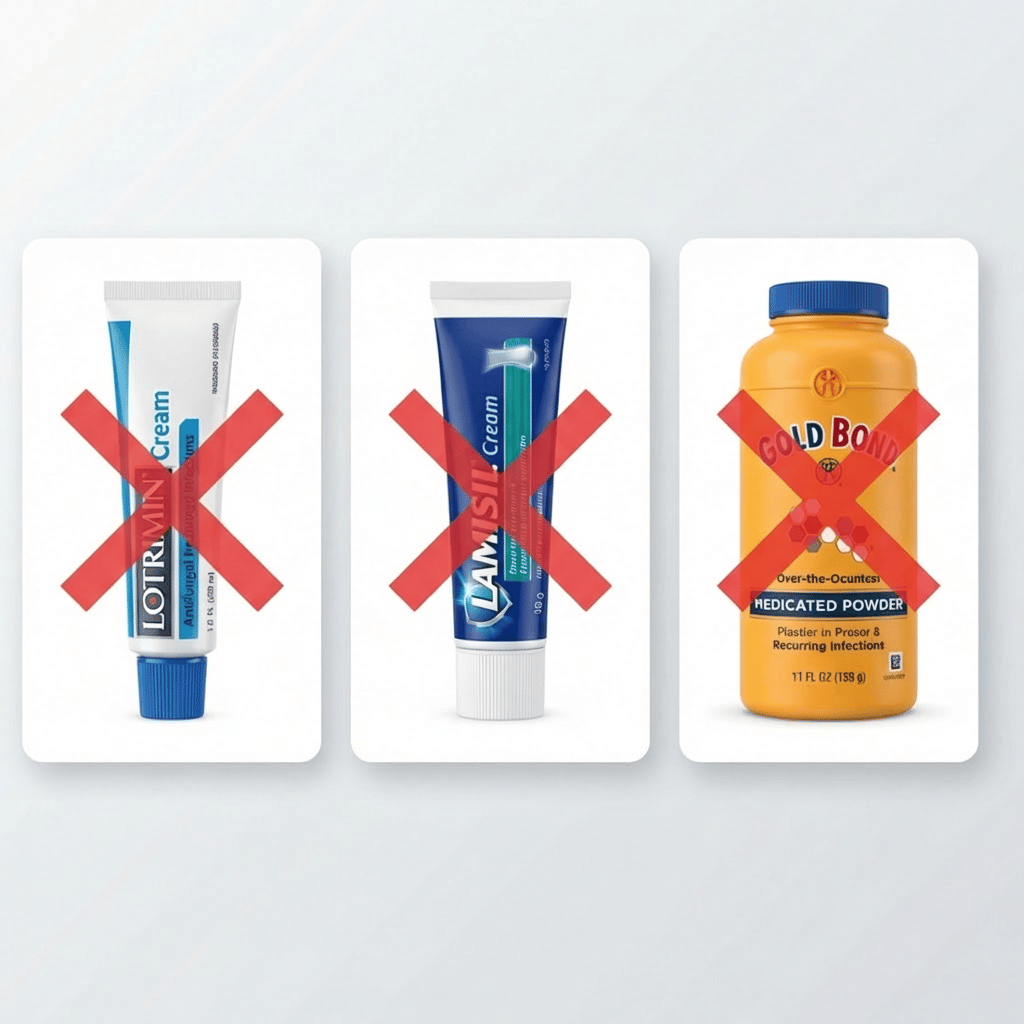
Steroid creams like hydrocortisone — these suppress your skin's immune response. Short-term, the redness goes down. Long-term, the fungus spreads faster because your skin can't fight back.
Talc-based powders — they absorb moisture on the surface, but they don't kill fungus. And the moment you start sweating again, the powder clumps and creates a damp paste against your skin.
The exact opposite of what you need.
So what actually works?
You need something that does two things at once: break the biofilm shield AND kill the exposed fungus underneath.
That's where the next tip comes in.